
Advice from a Pediatric Physical Therapist: When to Seek Help for Toe Walking
February 16, 2026
Written by: Deanna Adair PT, DPT, cert. MDT, Physical Therapist at Schreiber Center for Pediatric Development
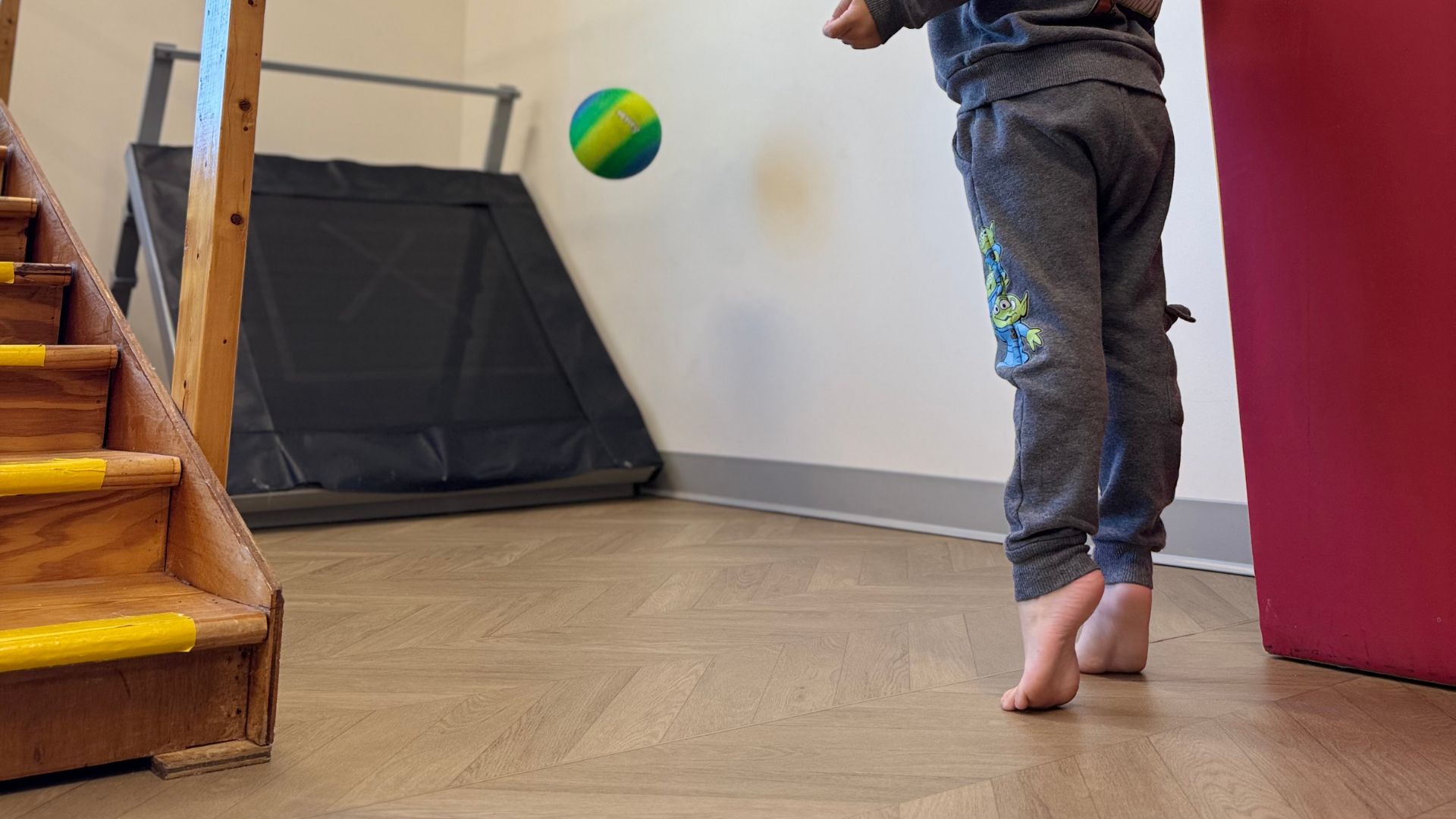
Idiopathic toe walking is one of the most common diagnoses that we see as physical therapists at Schreiber. It often starts when children first learn to walk, and while many parents assume or are told that their child will outgrow it, there is no reliable evidence in literature that it will resolve on its own.
We don’t always know the cause for a child’s toe walking, which is why it’s labeled ‘idiopathic’, but it is often for sensory-related reasons. It is possible that some children may be avoiding sensory input to their heels, while others might be seeking out the sensory feedback that they get from a bouncy toe walking pattern. It can also be related to emotional regulation, with toe walking increasing when the child is excited, stressed, anxious, or experiencing sensory overload. There can even be specific issues with the visual system that can sometimes lead to toe walking. It has been shown that children with autism and language disorders have a higher incidence of toe walking, although there are many toe walkers who do not fall into these categories.
Habitual toe walking often leads to weakness of certain muscles in the calves, hips, and abdominals. Over time, it can lead to difficulty finding shoes that fit, knee instability, increased frequency of injuries such as falls and ankle sprains, and even early arthritis.
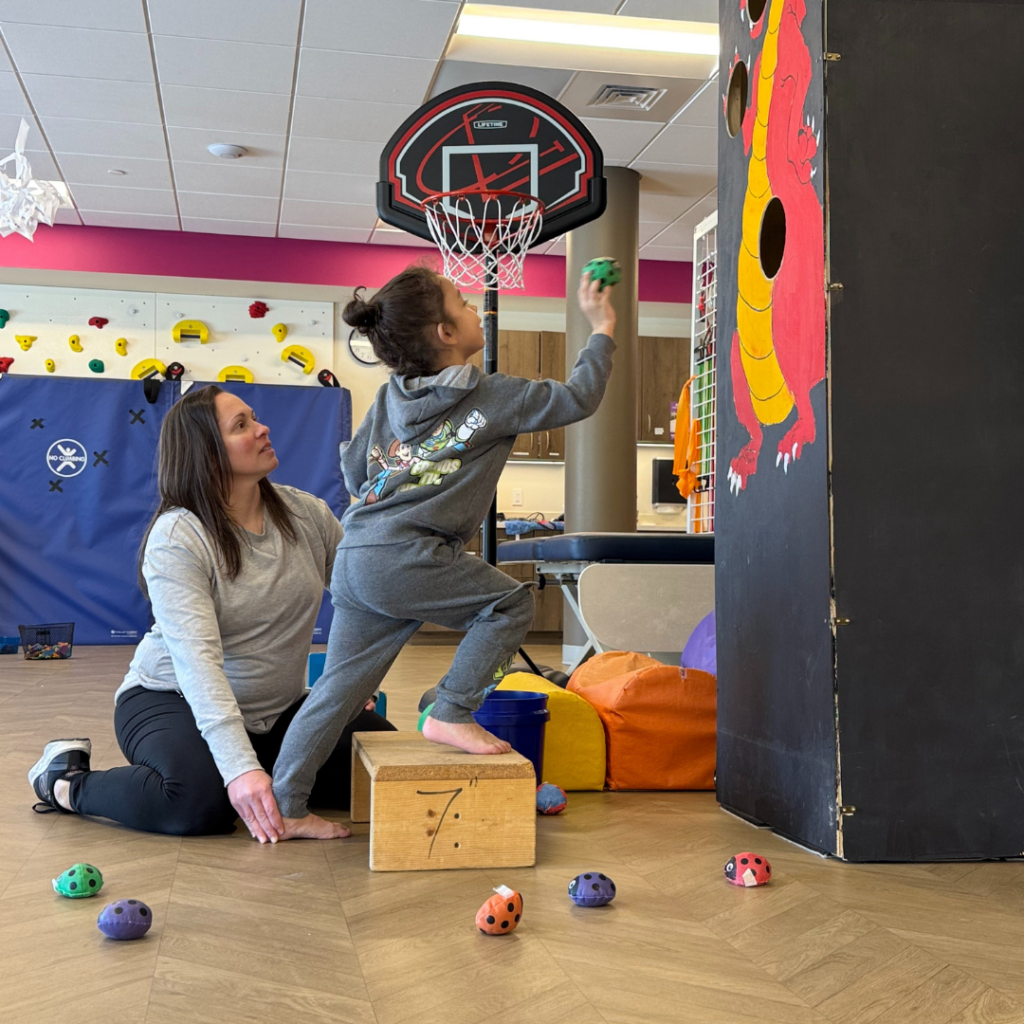
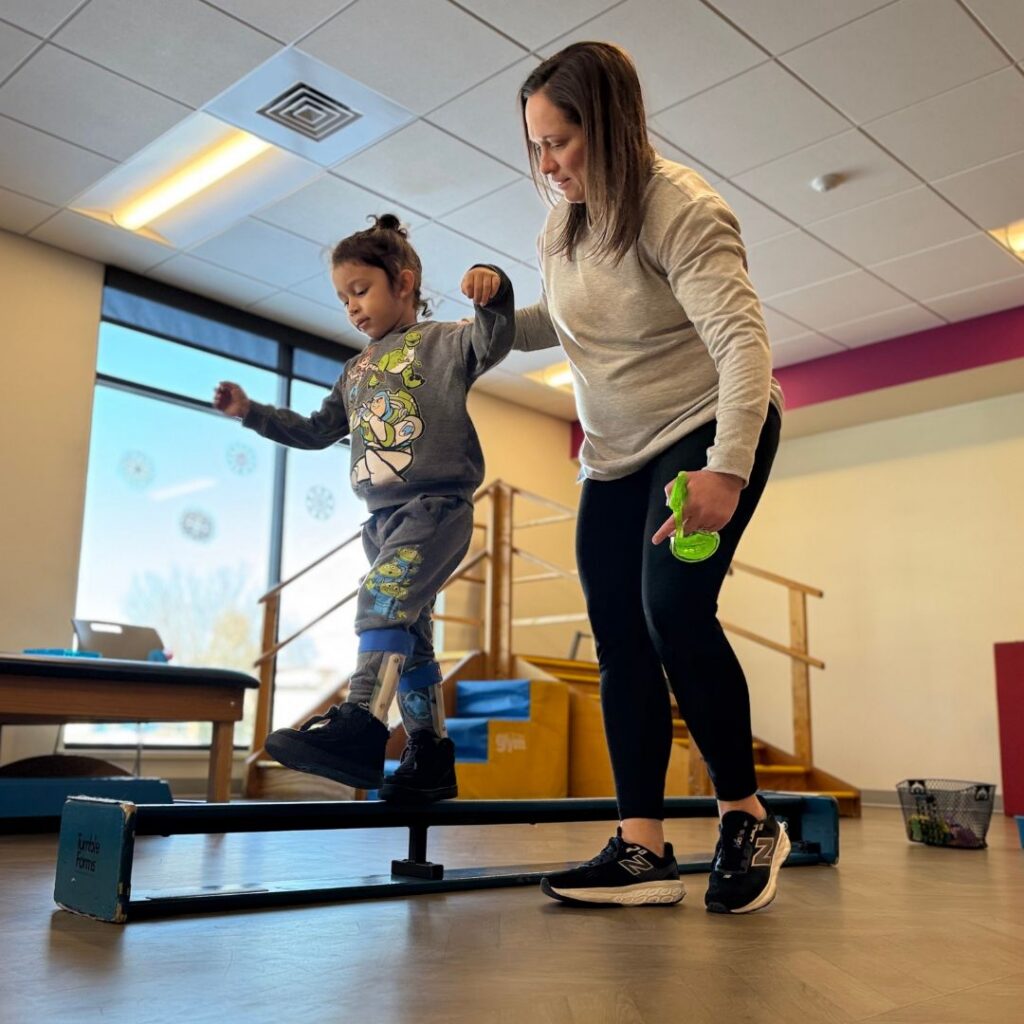
The good news is that individualized treatment for toe walking is available. Treatment options may include, but are not limited to, bracing with ankle foot orthoses or toe walking orthotics, wedging placed in shoes, muscle strengthening and retraining to assist in shifting body weight back onto the heels, night splinting, and/or serial casting. Ankle foot orthoses, which go up the calf to just below the knee, prevent the child from being able to point their toes, necessitating that they walk with a heel-toe pattern to retrain their gait pattern. Surestep toe walking orthotics, which are often used for less severe or less frequent toe walking, cover only the lower part of the calf and if the child goes on their toes, the brace applies pressure to the back of the calf, providing a cue for them to go back down. Wedging placed in the shoes can “fill in the gap” between the heel and the floor, allowing the shoe to contact the floor so that the child bears weight through the heel. Night splinting is bracing worn to bed to improve or maintain length of the heel cords (calf muscles). Serial casting is also used to improve flexibility by placing a cast on the foot and ankle for 1-2 weeks in a stretched position, and repeating this procedure until the range of motion/flexibility is satisfactory for the child’s age.
If your child is toe walking, it is best to intervene as early as possible. The bones of the foot are solidified by the age of 3, and the heel bone is solidified by age 7, so the potential for the most effective treatment decreases as the child gets older. After age 7, we switch our focus from preventing changes to the bone structure to accommodating for changes that have already occurred, through muscle lengthening, strengthening, and retraining. If your child is toe walking, no matter their age, talk to your pediatrician or family physician about a referral to physical therapy at Schreiber for an evaluation to help determine the root cause of the behavior and the most effective treatment plan moving forward.

Get Our eNewsletter
Stay informed and inspired
Subscribe to our newsletter for the latest Schreiber news, events, and stories. You can also follow us on Facebook, Instagram, LinkedIn, and YouTube..