

Milestones in Disability History
Progress in civil rights at the national level helped make community-centered organizations like Schreiber possible and local work, rooted in compassion and advocacy, continues to move that progress forward.
Why Disability History Matters
Disability history is not a story of limitation. It is a story of innovation, persistence, and community.
Each milestone below represents a moment when barriers were challenged, voices were heard, and access expanded. These moments helped shape how children are educated, how families are supported, and how communities embrace kids of all abilities.
A Timeline of Progress
1829
Louis Braille invented the raised point alphabet that bears his name, helping visually impaired people to read and write independently.
1864
Gallaudet University was established as the first college for people who are deaf, marking a national commitment to higher education and the linguistic recognition of American Sign Language.
1932
Franklin D. Roosevelt became the first person with a disability to be elected President of the United States. He served four terms.
1935
President Roosevelt signed the Social Security Act into law, establishing assistance programs for people who are blind and people with disabilities and marking the first time the U.S. government formally recognized disability as a social and economic issue.
1936
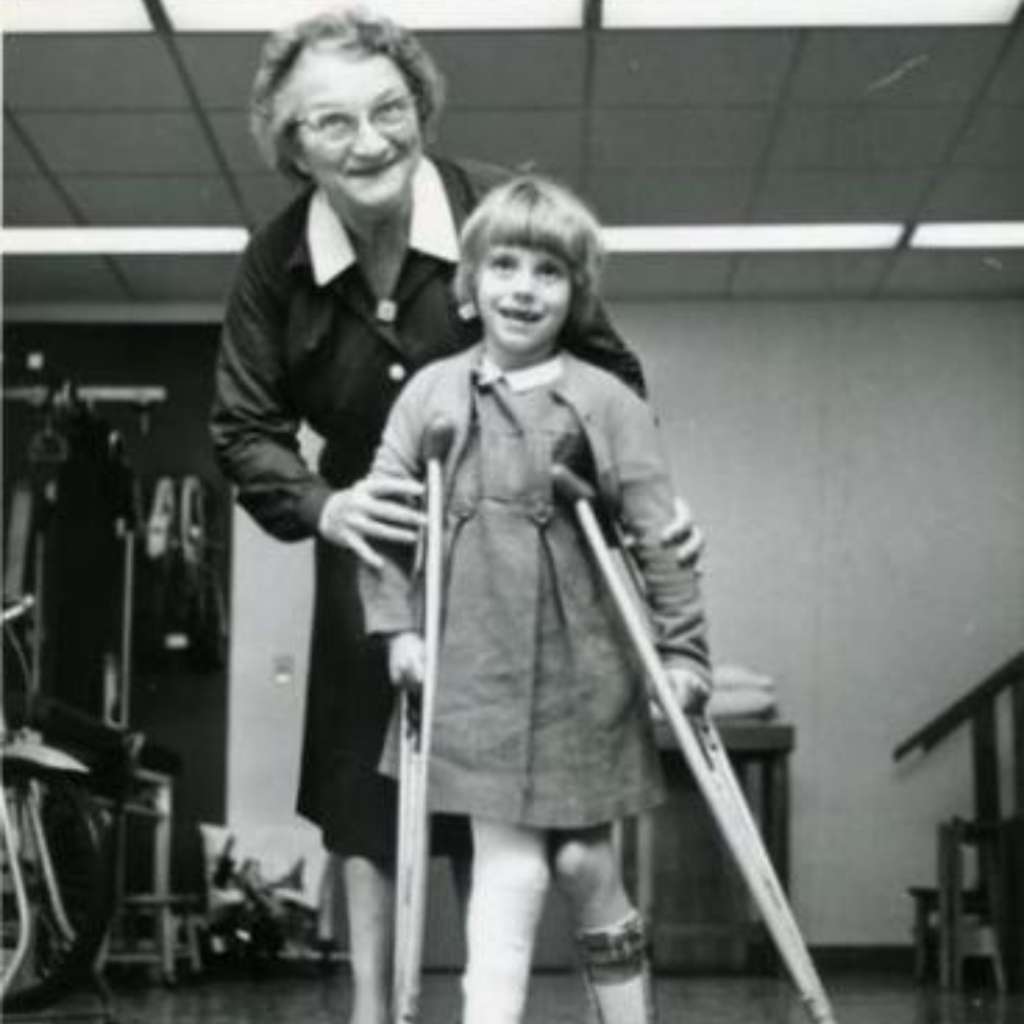
Edna Schreiber received a $2,500 grant from the Lancaster Rotary to open the Lancaster County Society for Crippled Children and Adults, which later merged with Easter Seals of Southeastern Pennsylvania in 1949.
1950
The Arc was established by parents to advocate for people with intellectual disabilities.
1965
The Social Security Amendments of 1965, also known as the Medicare and Medicaid Act, created a cooperative federal and state program for people receiving public assistance, including families with children, older adults, people who are blind, and people with disabilities.
1972
PARC v. Commonwealth of Pennsylvania was a landmark court case that declared children with intellectual disabilities had the right to public education. The case served as a precursor to national legislation guaranteeing equal access to education.
1973
Section 504 of the Rehabilitation Act was the first U.S. civil rights law to protect people with disabilities from discrimination in federally funded programs and activities.
1975
The Education for All Handicapped Children Act, now known as the Individuals with Disabilities Education Act (IDEA), required public schools to provide a free and appropriate public education to all children with disabilities in the least restrictive environment.
1990
The Americans with Disabilities Act (ADA) became a defining civil rights law that prohibited discrimination against people with disabilities in public and private spaces, employment, transportation, and communications—creating a new era of accessibility. Boston held the first-ever Disability Pride Day to celebrate its passage.
1994
The Schreiber Center separated from Easter Seals and became known as the Schreiber Pediatric Rehab Center of Lancaster County. The organization was later renamed the Schreiber Center for Pediatric Development in 2018 to better reflect the breadth of its services.
1996
The Federal Telecommunications Act was enacted, requiring computers, telephones, closed captioning, and other telecommunications equipment to be made accessible.
1999
Olmstead v. L.C. and E.W. ruled that unjustified institutionalization of people with disabilities was discrimination under the ADA. The decision established the “community integration mandate,” affirming the right of individuals with disabilities to live and receive services in the most integrated, community-based setting appropriate to their needs.
2004
The first Disability Pride parade was held in Chicago, drawing 2,000 attendees. The event was intended to affirm that disability is a natural part of human diversity and that people are not defined by their limitations.
2008
The ADA Amendments Act expanded the definition of disability to ensure broad coverage under the ADA, protecting more individuals with physical and mental impairments from discrimination.
2010
Rosa’s Law replaced the term “mental retardation” with “intellectual disability” in U.S. federal law, promoting respectful, person-first language in education, health, and legal contexts.
2010
The Affordable Care Act (ACA) expanded healthcare access and protections for people with disabilities, including banning the denial of coverage for pre-existing conditions, improving Medicaid home- and community-based services, and strengthening long-term care options.
2014
The Workforce Innovation and Opportunity Act promoted inclusive employment by expanding opportunities for people with disabilities to contribute their skills and talents in the workplace.
Looking Ahead
Each milestone on this timeline reflects progress but the work continues.
We believe inclusion starts early, grows through community, and thrives when families are supported. The progress made through advocacy and innovation only matters when it shows up in real, everyday moments for children and families.
That’s why sustaining this work matters.
Through our EmpowerAbilities Society, monthly donors help turn progress into possibility and ensure children can access therapy and no milestone is out of reach because of cost or circumstance. Ongoing support allows us to plan ahead, respond when families need us most, and continue building brighter futures for children of all abilities right here in Lancaster County.


Ways to Give
Donating to the Schreiber Center is an investment in a child’s future.
Your contributions allow us to continue offering life-changing services to children in need, providing them with the tools and support to achieve their dreams. Whether through one-time gifts, recurring donations, or legacy giving, your generosity makes a lasting difference in the lives of Schreiber kids.